


Host: Alright! We have Sen right next to me here in the studio!
Sen: Thank you for having me!
Host: Sen, you are a passionate advocate for gender equality policymaking, and you are in the heart of the young feminist biotech movement. Can you tell us more how you found yourself at the forefront of this?
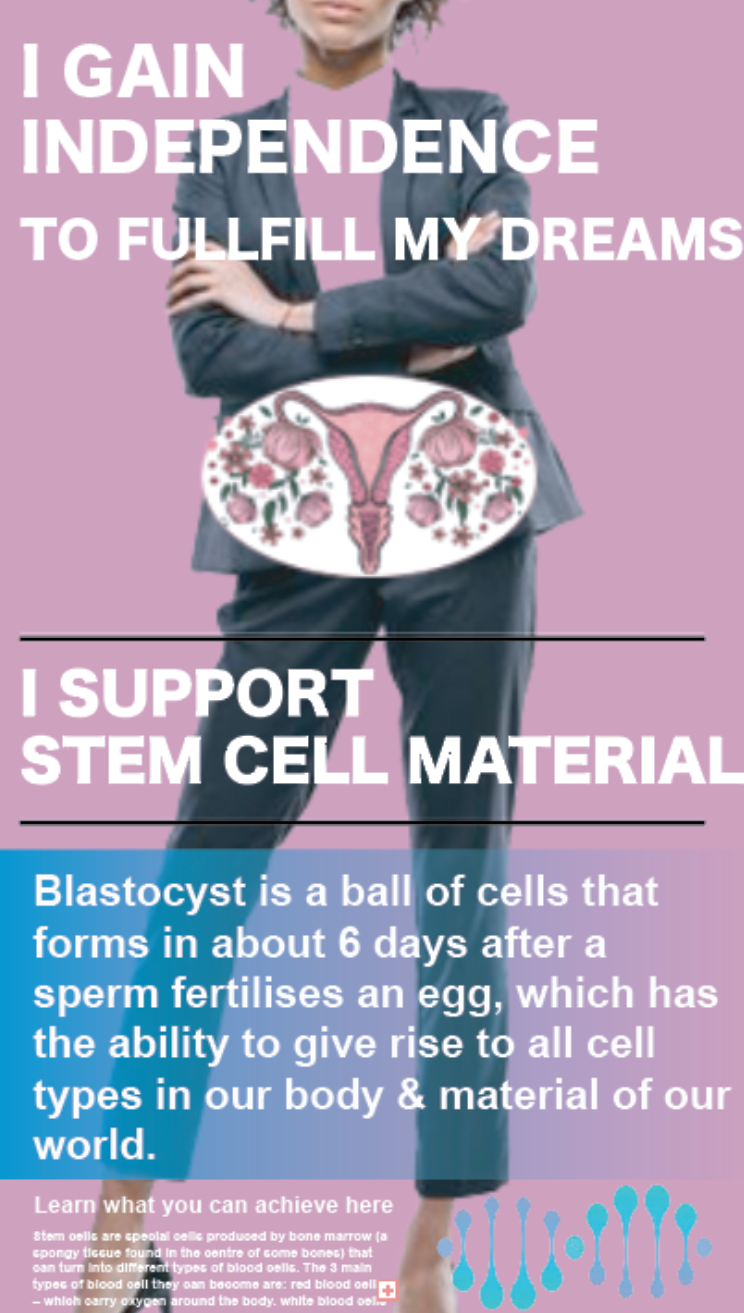
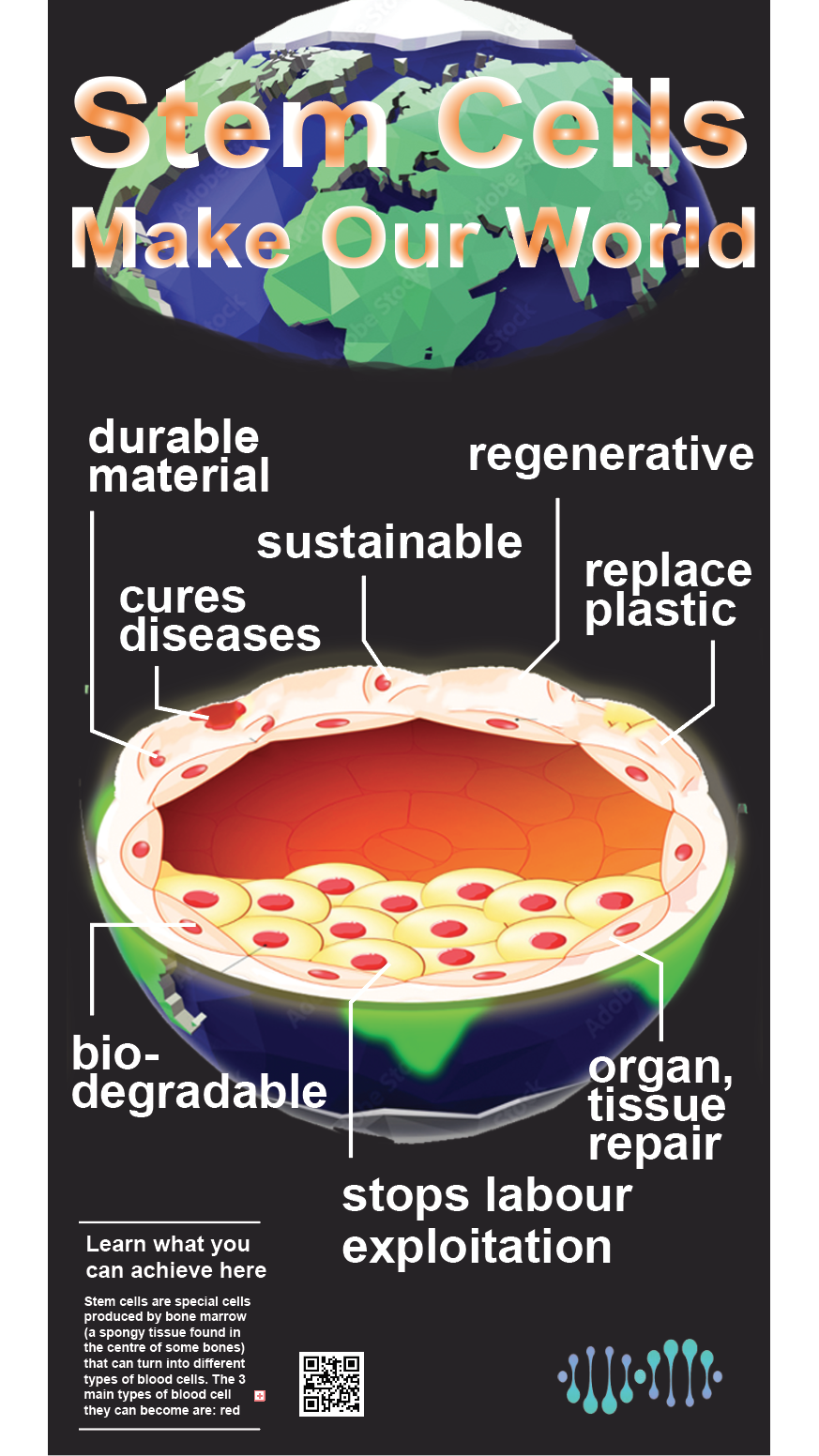
Sen: Of course! So I was just 15 when stem cell technology revolutionized our world, empowering uterus-bearers. If you remember, we were in a transition to a more sustainable society. But as technologists and biologists, we were witnessing a widening gap of social and gender inequality, and we didn’t want to bring the old biases to the new world we’re building, so I decided to gather voices for those who were affected.
Host: If we can dive deeper into your story, was there a particular moment that fueled your determination to initiate this?
Sen: So looking back, I think…It probably started with my sister. Um, she won’t mind me sharing this, but way before my involvements in biotech activism with the feministic approach - She faced a tough reproductive decision which came about due to genetic predisposition. Whereas in our grandma’s generation, she might have felt compelled to follow traditional norms: heteronormativity, gender roles, or family expectations. Amazingly, the doctors introduced us to solutions that could cure her condition by extracting and dividing her own stem cells, in the duration of…well, technically, forever. Even after we’re long gone. Now not only does she have the options that allow her to align with her aspirations and desires, her cells can also be used to support others meaningfully…like blood donation for example. She is now helping with waste problems using her cells as regenerative bio-material…and of course all of these are under full consent. So now she is financially independent with income streams from stem cell productions. And it is this has totally solidified my commitment to empowering others with the same agency.
Host: Her story is such a fantastic example on how crucial it is for the public to have access to such cutting-edge healthcare support, considering that some countries lag behind in stem cell research.
Sen: Absolutely, but even in our society, humanity hasn't caught up with technological advancements, and policymakers often employ a blanket approach, which favours top-down methods of thinking. That's how detached they are from reality, right? Yet, their decisions, those decisions construct our everyday experiences.
Host: It’s like a digital echo chamber, creating singular versions of reality. That’s how the sinkhole of gender gaps widen, just like this.
Sen: Yes! Rebuilding the collapse of trust in society requires active listening from all sides! When was the last time in a debate you asked, or were asked, emphatically, 'What makes you think that?'...or… ’How did you get there?'
Host: While understanding doesn’t mean agreeing, you can find common ground more easily by asking constructively.
Sen: Exactly.
Host: So how do you work with other young advocates in the feminist biotech movement?
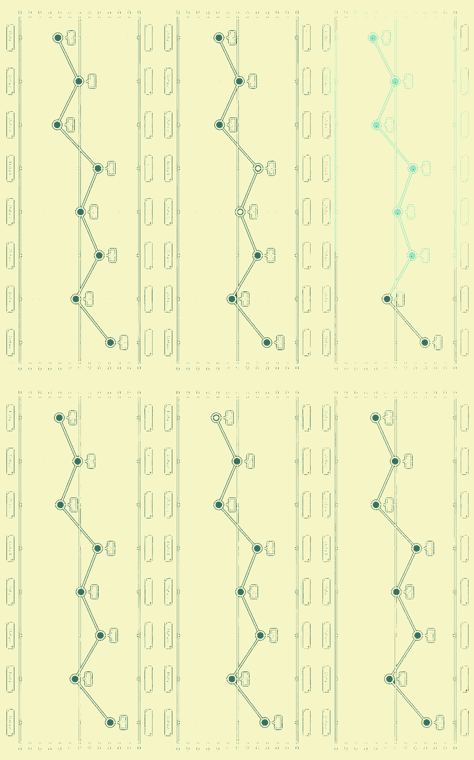
Sen: So to counteract the blanket approach in policy making, I gathered up some loud young people from different industries, and we’re skilled in many areas. What we do - is that we carefully document interviews from often marginalised communities, and then visualise how they’re affected by inequality and inequity using visual data, and maps. These less biased datasets can help pave the way for more inclusive future with biotech applications, pushing for better infrastructures. Also, on a personal level, I wanted to ensure that ‘young uterus-carriers’ like us understand the value and privacy of bio-material like stem cells, especially when exploitation is around our doorstep, we must be educated to make informed decisions for our own bodies and choices.
Host: That's remarkable, Sen.
Sen: Thank you.
Host: And for our listeners who want to be part of the future of feminism, how can they reach out to you?
Sen: So you can drop us an email at FutureUterus@gmail.com. And we’ll love to hear your story with bio-technology.
Host: Thank you, Sen, for what you’re doing for the world. We will explore more topics on stem cells!
Up next:
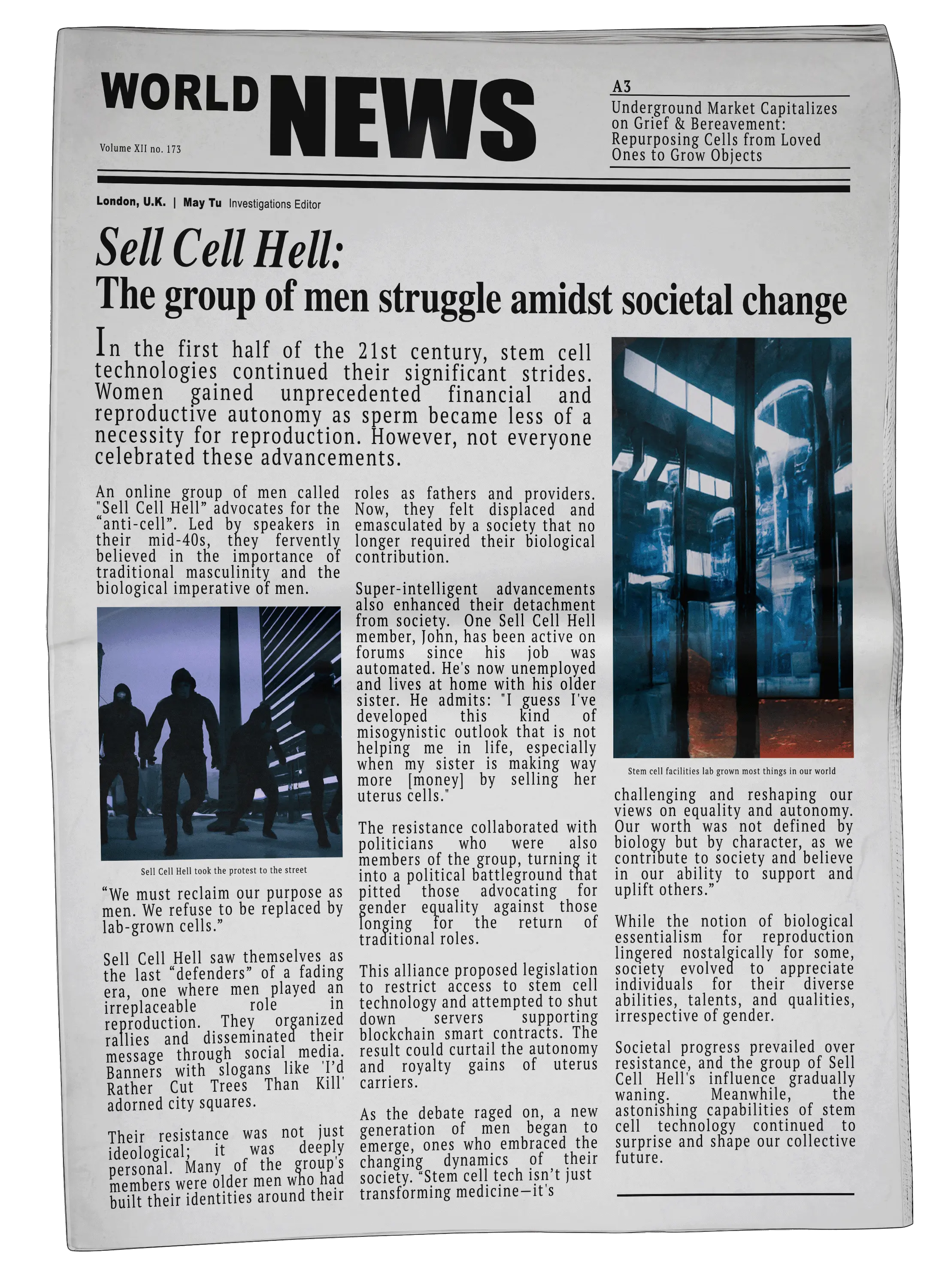
How the underground market is capitalizing on bereavement, people are repurposing their cells from loved ones to grow objects!
A widower uses his late loved one’s stem cells to build furniture. Skin flakes as curtain and hair into a house, where he continues to live.
Stay tuned!